Practice
Divination as a reflection tool
Can divination pose questions without making decisions?
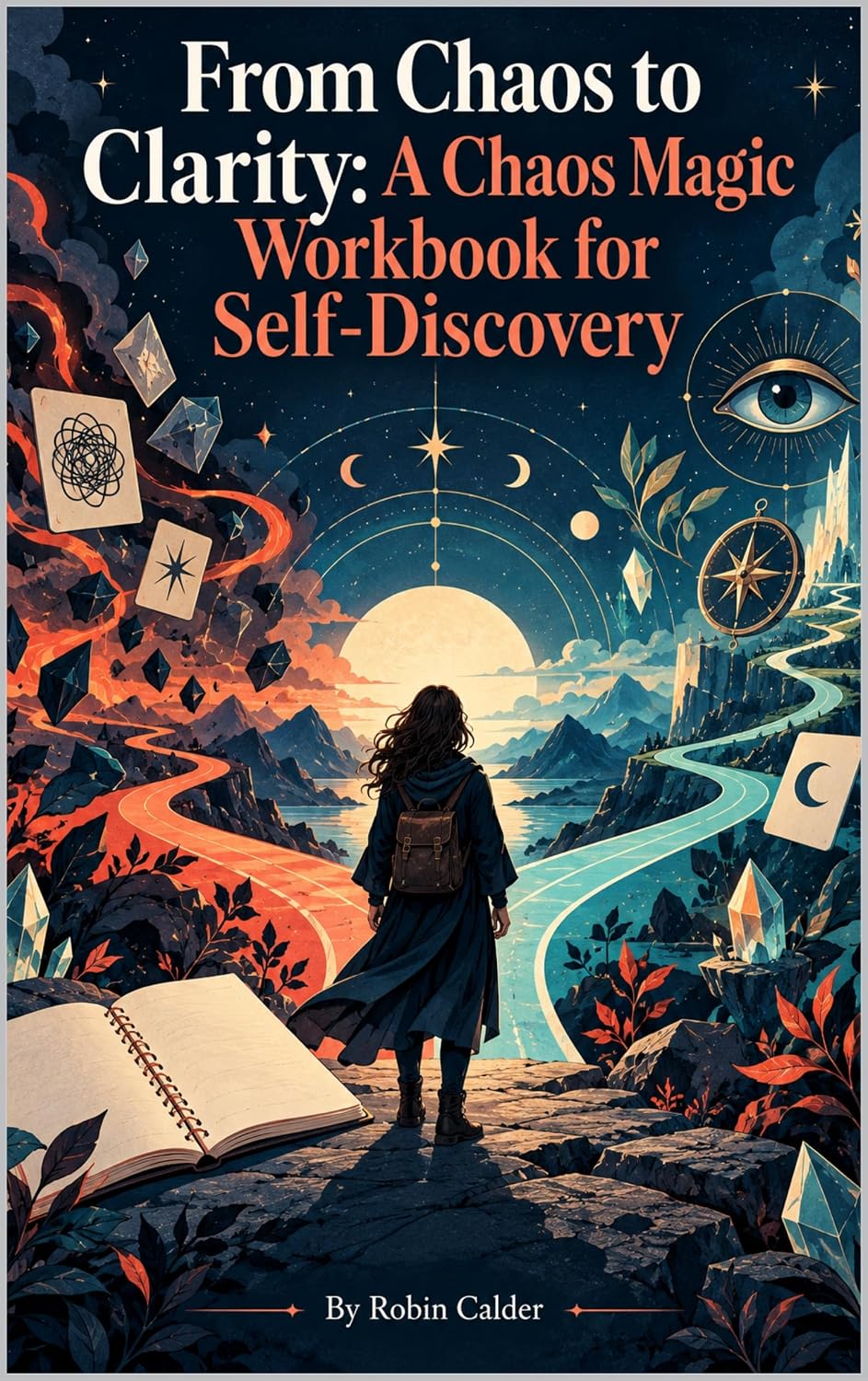
Yes, and that is how the workbook frames it. Divination is treated as a source of questions while personal responsibility for the decision stays with you. No result is read as a prediction, an instruction or an authority, and the book makes no claim of supernatural effects.
Questions instead of verdicts
Most divination advice asks what a card means. The workbook asks what the card makes you notice. That shift sounds small, but it changes the practice: the layout stops being a verdict to obey and becomes a prompt you can argue with.
A useful question is specific enough to answer in writing. “What am I protecting by saying yes to this?” is workable. “What does my future hold?” is not, because it invites a prediction the workbook refuses to make.
What to do with an uncomfortable answer
If a layout produces something you dislike, the workbook’s approach gives you two options: write it down and test it, or write it down and disagree. Both are legitimate. What it does not invite is treating the discomfort as evidence that the reading is accurate.
Notice what you wanted the answer to be. That reaction is often the most useful thing on the page, and it belongs in the log alongside the event itself.
Three questions worth asking of any layout
These are suggestions in the spirit of the workbook, not a transcription of its pages.
- What does this suggest I have been assuming without checking?
- Which part of this is within my influence this week?
- What would I need to observe to know whether that assumption is wrong?
Where prediction is deliberately left out
The workbook does not claim that symbols reveal the future, and it does not ask you to trust a reader’s authority over your own judgement. That is a boundary, not a lack of imagination. It keeps the practice honest and it keeps you responsible.
It also means a reading can never settle a factual question. If you need information about a contract, a diagnosis or a person’s intentions, the layout is not the source. Ask, check, or seek qualified advice.
Fitting divination into the loop
In the four-step loop, a layout usually belongs to the notice or experiment step. It can surface an assumption you had not named, or test what happens when you approach a familiar decision from an unfamiliar angle. The review date is what turns the reading into something you can learn from rather than something you remember selectively.
Continue through the guide
The listing is the only place to check availability, price and delivery.